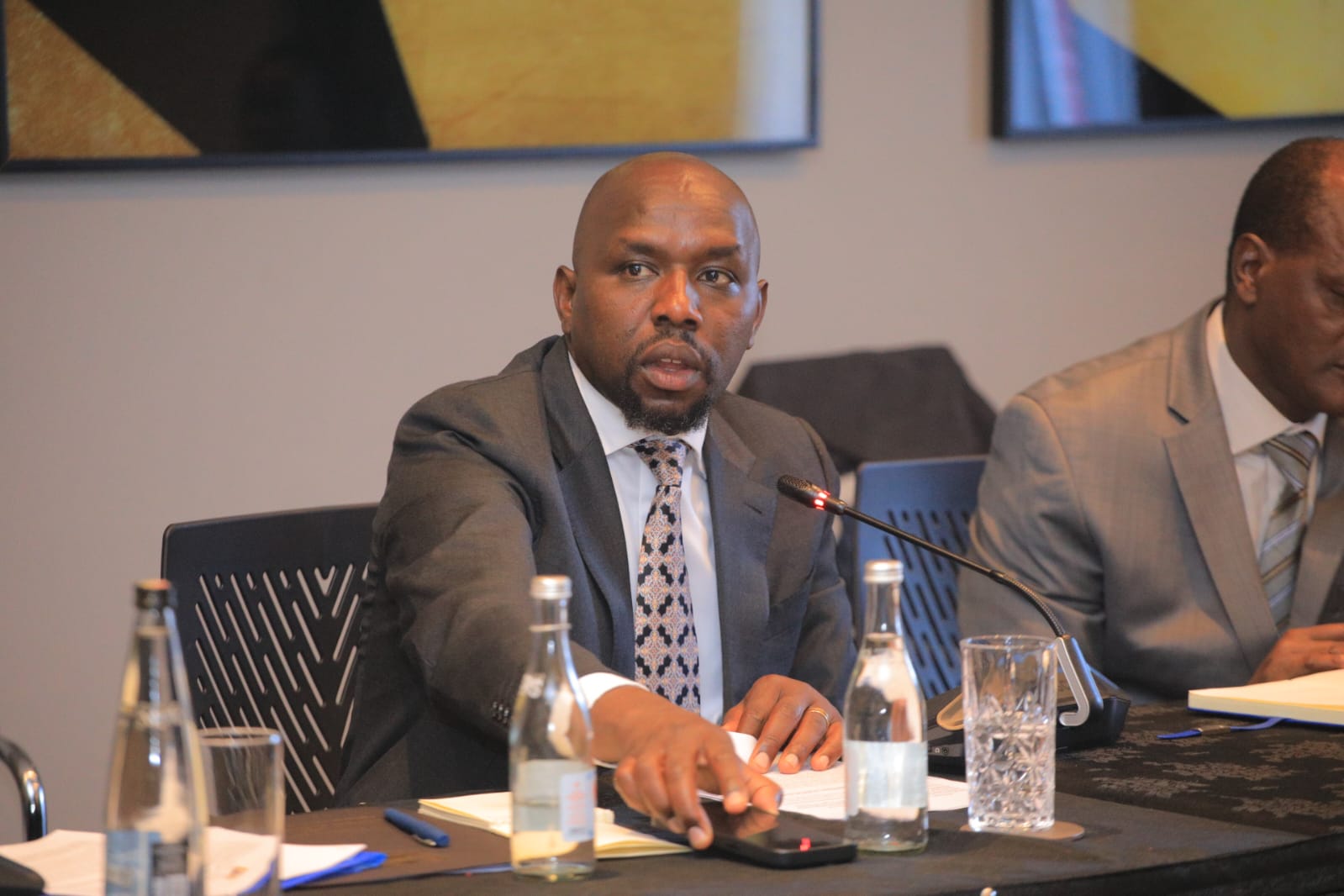
Interior and National Administration Cabinet Secretary Kipchumba Murkomen has assured MPs that comprehensive security measures are in place to safeguard the proposed Field Development Plan (FDP) and Production Sharing Contracts (PSCs) for Blocks T6 and T7 in the South Lokichar Basin, Turkana County.
During the appearance before the lawmakers on Thursday, Murkomen detailed a multi-agency security framework designed to protect oil infrastructure, personnel and host communities during production and evacuation phases.
He said the National Police Service (NPS) conducted an in-depth security risk assessment covering upstream oil fields in the Lokichar Basin, feeder roads, storage facilities and designated crude oil transportation corridors.
''The National Police Service conducted an in-depth security risk assessment focused on the upstream oil production areas in Turkana County, including oil fields in Lokichar Basin, feeder roads, storage sites and designated crude oil transportation routes exiting the county," Murkomen told MPs.
''The objective of the assessment was to identify potential vulnerabilities, evaluate existing security gaps and formulate proactive mitigation measures to ensure the safe and uninterrupted implementation of the FDP."
Murkomen reported that the assessment identified potential threats, including inter-communal conflicts, banditry, cattle rustling, cross-border incursions and proliferation of small arms.
Socio-economic concerns such as land ownership disputes, compensation claims, employment expectations and revenue-sharing grievances were also flagged as possible conflict triggers if not properly managed.
''Along crude oil transportation corridors, the Service identified risks related to possible illicit siphoning, vandalism, sabotage and opportunistic criminal activities targeting oil transport convoys," Murkomen said.
''The remoteness of certain oil fields and stretches of access roads, coupled with infrastructural limitations and terrain challenges, were also identified as operational vulnerabilities requiring enhanced mobility, forward deployment and rapid response capability."
"Along transportation routes, risks of illicit siphoning, vandalism, sabotage and attacks on oil convoys were identified, particularly in remote and infrastructure-poor areas. Storage facilities face threats such as industrial sabotage, insider facilitation and organized criminal interference," he added.
The CS as well said that the NPS has deployed additional officers to Turkana and strengthened Critical Infrastructure Protection Units, including enhanced patrols in high-risk zones, establishment of patrol bases along oil corridors, deployment of specialized units and intelligence-led operations.
''Deployment of additional officers to the County upon graduation of the current cohort of officers undergoing training, where we have ensured Strengthened Critical Infrastructure Protection Units within the County, and we have enhanced patrols and intelligence-led operations along identified high-risk zones," said Murkomen.
''We have done deployment of specialized units in the area, establishment of patrol bases along the oil transport corridor and also we have ensured strengthening community policing frameworks and structured stakeholder engagement to address grievances proactively and prevent escalation into insecurity."
Murkomen clarified that security agencies will operate under a coordinated preventive approach, saying that the NPS will maintain law and order during land disputes, compensation exercises and public consultations.
He added that the Kenya Defence Forces (KDF) will provide strategic protection of critical national infrastructure and deter cross-border threats where necessary, within constitutional limits, adding that the National Intelligence Service (NIS) will monitor emerging tensions and provide early warning assessments.
"KDF will Provide strategic support in the protection of critical national infrastructure where necessary and within constitutional provisions, reinforce security operations in high-risk scenarios upon lawful request, prevent and deter cross-border incursions that may destabilize the County and threaten oil infrastructure particularly given the region’s proximity to international borders and conduct border security operations in collaboration with other security agencies to ensure territorial integrity and stability along frontier zones," he explained.
The Ministry of Interior will coordinate National Government Administrative Officers to facilitate dialogue and convene multi-agency forums, while County Security Committees will undertake localized risk assessments and peace-building initiatives.
Given the project’s strategic national importance, Murkomen said a unified multi-agency security and emergency response framework has been adopted.
"Given the strategic national importance of the project, the framework adopted a unified, multi-agency approach integrating security operations, intelligence coordination, disaster management, environmental protection and community stabilization mechanisms. The objective is to ensure protection of critical infrastructure, prevent and deter security threats and guarantee rapid response to emergencies," Murkomen affirmed.
To curb illicit siphoning and vandalism, all crude oil transport vehicles will move in structured convoys under armed police escort.
Authorities will maintain sustained patrols along production sites and evacuation routes, erect strategic roadblocks and conduct decisive enforcement operations against criminal networks.